

 Login
Login
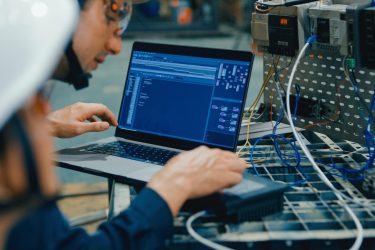
Ian Wallace from Suffolk-based facilities management company OCS examines the growing role of AI and automation across the sector.
Manufacturing and engineering businesses have always relied on data, systems and automation to improve efficiency, control costs and maintain quality. From early MRP systems and SCADA to total quality management and digital twins, this sector has a long track record of adopting technology where it delivers clear commercial benefit.
And I believe AI and automation should be viewed in the same way.
While often described as revolutionary, they are better understood as the next step in an already data-rich environment. The manufacturers making progress today are not chasing novelty. They’ re applying AI as an extension of existing strengths, including good data, disciplined processes and deep operational knowledge, to run smarter, leaner and more resilient operations.
What AI and automation look like in practice
AI adoption in manufacturing is not about replacing people or building fully autonomous, “lights-out” factories. Its real value lies in supporting skilled teams by adding intelligence to everyday decisions and reducing unnecessary friction.
In practical terms, this means:
- Identifying risks and opportunities earlier.
- Reducing non-value-adding activity.
- Improving decision quality at every level.
- Creating smoother, more predictable day-to-day operations.
One common application is predictive insight. By analysing machine data, production history, quality trends and supplier performance, AI can identify potential issues before they affect output or quality. This shifts teams from reactive firefighting to planned, proactive intervention.
Adaptive automation is also becoming more widespread. Routine activities such as scheduling, purchasing, approvals and quality checks can be automated and adjusted dynamically using real-time data. Over time, these systems learn from outcomes and improve accuracy.
Another fast-growing area is intelligent vision systems. AI-enabled cameras support quality control, safety monitoring and inventory management with consistent accuracy. As systems learn from each production run, performance improves without increasing labour demand.
And at a leadership level, AI can consolidate data from ERP, production systems, financials and sales into a single, coherent view. This enables trends, risks and margin pressures to be identified earlier, supporting more confident and timely decisions.
Where AI is already delivering value
Across the sector, AI and automation are being applied in targeted ways that deliver measurable outcomes.
In production and process efficiency, automated inspection reduces rework and waste, while predictive maintenance uses vibration, temperature and usage data to reduce unplanned downtime. AI-driven scheduling improves labour utilisation, machine uptime and changeover sequencing.
In engineering and product development, generative design tools explore thousands of design options to reduce weight, improve strength or lower costs. Digital twins enable teams to test process changes, workloads or factory layouts without disrupting live production, thereby encouraging faster learning and safer experimentation.
Within the supply chain, demand forecasting adapts to seasonality and shifts in customer behaviour. Procurement systems monitor supplier performance, lead times and commodity pricing, while energy optimisation tools reduce consumption across plants and buildings.
For finance and commercial teams, AI-driven costing models update in real time, drawing on labour, material and machine data. Automated reporting highlights emerging trends and risks earlier, improving control and forecasting accuracy.
Common AI and automation pitfalls to avoid
Successful adoption is less about technical sophistication and more about discipline and focus.
One of the most common mistakes is starting too big. Large, end-to-end transformation programmes often stall. Whereas smaller, well-defined initiatives that demonstrate value quickly build confidence and momentum.
Data quality is another critical factor. AI cannot compensate for inconsistent, fragmented, or poorly governed data. Establishing basic data standards is essential before meaningful insight can be expected.
The human impact must also be addressed early. Concerns about job security are real. Clear communication about why technology is being introduced and how it supports rather than replaces people is vital.
Finally, technology should never be selected before the need is clearly defined. A clear set of user requirements helps avoid costly solutions that do not work or integrate smoothly with existing systems, machinery or workflows.
Identifying the right opportunities
AI and automation deliver the fastest return in areas where friction is persistent and manual intervention is frequent. High-cost or high-waste activities, including downtime, energy use, labour and materials, often offer the clearest starting point.
Data-rich processes such as production logs, maintenance records and quality data are strong candidates for AI insights. Predictive use cases, including forecasting breakdowns in demand, inventory or capacity, are particularly effective when early intervention reduces cost or risk.
Low-risk pilot projects are often the most effective way to begin. Demonstrating that a concept works in practice builds belief, capability and budget for wider adoption.
A measured path forward
For manufacturing and engineering leaders, AI does not require a leap of faith.
It rewards the same principles the sector already understands, including strong data, clear processes, skilled people and a focus on outcomes. Applied intelligently, it strengthens productivity, resilience and decision-making without adding unnecessary complexity.
The organisations that see the greatest benefit are not those doing the most, but those doing the right things, deliberately and well.

Ian Wallace, Sector Managing Director – Industries, OCS UK
Ian leads the industries sector at OCS UK, overseeing a portfolio of high-profile manufacturing customers across aerospace, automotive, food and drink, and print.
He brings more than 25 years’ experience across manufacturing and facilities management. Ian spent the first decade of his career in technically led manufacturing roles, followed by more than 15 years in senior leadership roles with tier-one FM providers.
This background gives him a clear, practical understanding of the challenges and opportunities facing manufacturing and engineering businesses, from shop-floor operations to board-level decision-making across the UK.
To find out more visit OCS.com



 Back
Back