

 Login
Login
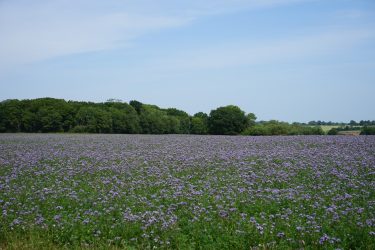
Last month, in the glorious summer sunshine, several members of our Agriculture & Estates Team travelled to the Sotterley Estate at the kind invitation of the Barne family, and the management team who run the Estate.
Over a number of years, Scrutton Bland have helped, advised and supported both short and long-term planning for projects, structure, finance options, management accounts, and compliance documentation across the Estate.
An estate full of opportunities
The tour began with an overview of the Estate from its CEO, Tom Brown, who explained that the Estate has been in the family for around 300 years. Historically the approach to Estate management had been traditional – farming alone drove its economic sustainability. But this was a challenging model to sustain, and a new entrepreneurial approach was needed that covered not only the 2,000-hectare estate, but that also stretched beyond the Estate’s geographical reach.
Tom explained that extending this reach has brought with it new opportunities such as hosting the FolkEast Festival in August this year. Highlighting how challenges in one area can unlock investment and facilitate opportunities in other areas. No one area of the Estate can be considered in isolation, and the Estate is open to opportunity as it arises.
Forestry for the future
The team were introduced to Miles Barne, Head of Forestry at the Estate, self-proclaimed oak fanatic, and winner of both The Bede Howell Award for Excellence in Silviculture, and the Royal Forestry Society’s Sylva Trophy in 2024 – a highly respected award that recognises an outstanding contribution to forestry.
Miles explained how the majority of our native woodlands disappeared long ago in the age where wooden ships ruled the seas. The lack of oak became desperate, and landowners were asked to plant oak plantations which, once steel ships were invented, became worthless. Trees grew and matured but were never wanted, the demand had waned.
Miles has painstakingly inspected the plantations on the estate and implemented a program of strategic tree selection, thinning, spacing, pruning and felling. Rewards are seen in not only the quality of the final timber product but also in other gains such as in increases in the biodiversity of the plantations.
The Estate is the perfect example of how long-term ownership can bring about long-term decision making. Whilst Miles will not live to see the benefit of the decisions he makes today and throughout his lifetime, he knows that the rewards will be present for future generations due to his commitment to ownership and stewardship.
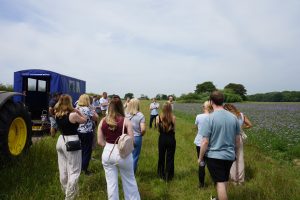
Investment decisions
The Estate is also home to a mixture of both residential and holiday let cottages. A pair of which we were lucky enough to visit. These picture-perfect cottages had been long-term residential rental properties but, following flood damage in 2023, the decision was taken to change them to holiday let cottages after the significant repair and refurbishment works were completed.
Tom explained that “Futureproofing requires investment. Decisions are challenging but must be made by weighing up the investment needed, assessing the economic return under different potential uses, their responsibilities to the community and managing benevolence.”
Biodiversity Net Gain
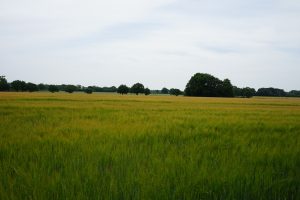
Over at one of the Estate’s combinable crop fields we met with Farm Manager, Daniel Hald, and Ceres Consultant, Katie Crawford, who explained some of the detail around biodiversity net gain. This method of development ensures a positive impact on the environment and is showcased by the Estate’s commitment to a tapestry of credits that will create and improve natural habitats. It’s also another example of how the Estate is planning today for 30 years in advance with consideration for future generations.
We learnt about their current mix of combinable and root crops and some of the issues facing such crops such as the clever but very problematic blackgrass.
They’re trying various farming practices across the Estate to manage this, with a desire for a 90% reduction in blackgrass in the spring barley crop alone. Having found that no soil disturbance before drilling hadn’t worked because of damage caused by previous farming practices. They’re now trialling and exploring ideas with aeration, soil repair, organic manure, and natural fertilisers to reduce systemic products and the bind to commodity prices. Technology has helped further by improving accuracy and streamlining processes.
Wild Things Kitchen & Bakery
Back at the barn, we all enjoyed a wonderful lunch spread provided by Wild Things Kitchen and Bakery who source local, thoughtful and sustainable produce, presented in colourful and creative menus.
Wild Things are just one of the local businesses that occupy commercial building units as part of the Estate alongside Folk and Fare and Hodmedod British Grains & Pulses. The idea here is to create a hub of businesses that reflect some of the Estate’s core values of local, nurturing, creative and heritage.
The finance cog
Moving onto the finances and Phil Dove, the Estate’s Finance Manager, who treated us to an entertaining and interactive session on the finance cog of the Estate’s wheel.
Phil covered how they make decisions, how assets are utilised, and how a careful balancing act of debts, interest and cashflow make it all work. Phil explained how their team relies on the expertise of their in-house team. Alongside them, the vital support from the specialist professionals they appoint – including us at Scrutton Bland – helps with the management of the business. He also explained how they have been able to use modelling to successfully project potential outcomes from various options to aid decision making.
Working together for lasting success
Across the years our support has provided essential information that’s supported the Sotterley team with planning and decision making in what can sometimes seem like a maze of complex options running an Estate. As they also navigate the opportunities, challenges, and decisions they’re faced with on a daily basis.
It’s vital that we understand our clients’ business and personal aims and objectives, so that we can provide bespoke, tailored advice.
The team all thoroughly enjoyed the day, and it offered the perfect opportunity to hear more about current and topical issues first-hand from the management team, on-site at the Estate to help prepare for the months (and years hopefully!) ahead of working together.
For more information on how we can support your agricultural business, get in contact with one of the team by calling 0330 058 6559 or email hello@scruttonbland.co.uk





 Back
Back